
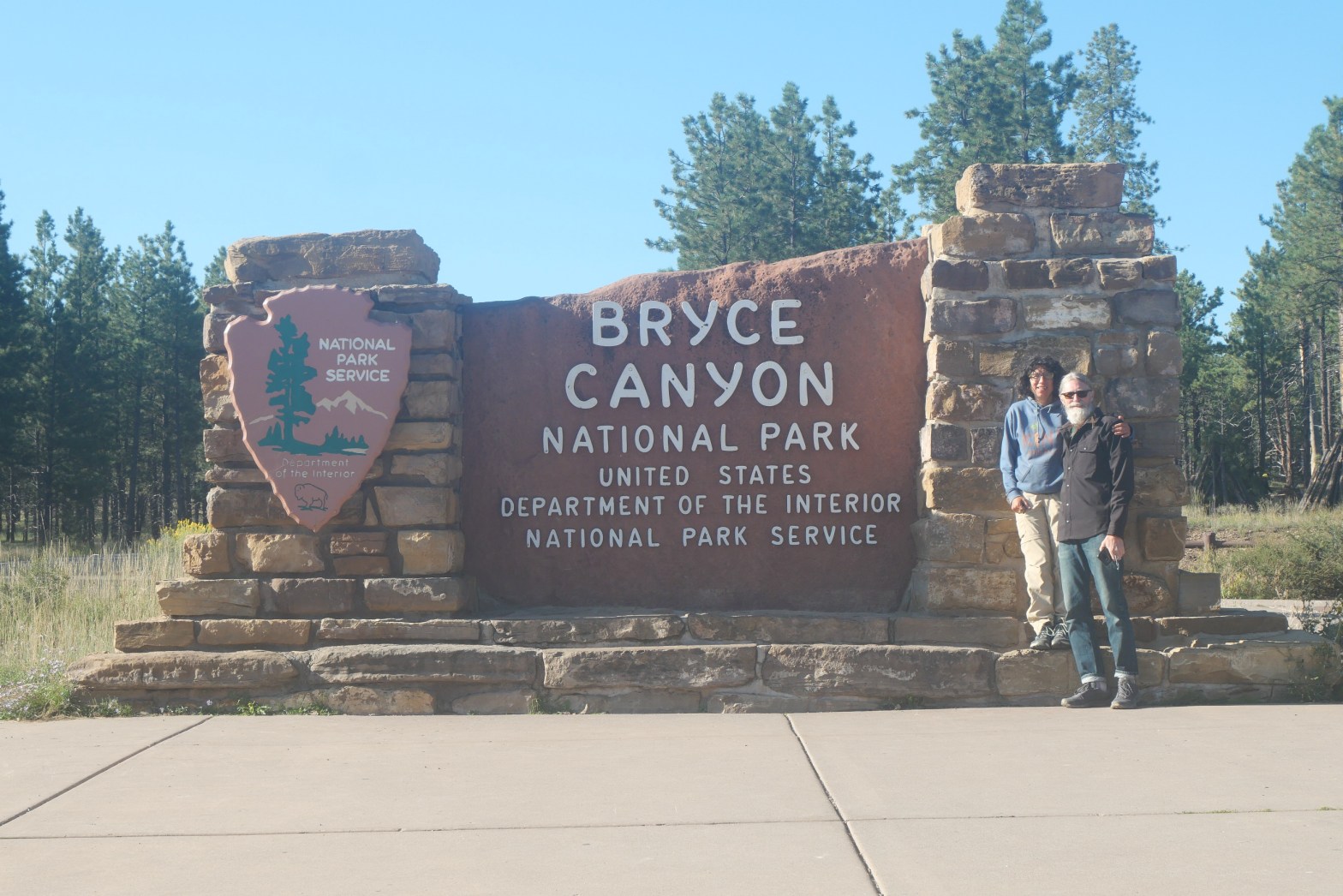
I make it a habit not to learn too much about a national park before I visit so that I can be surprised. Bryce Canyon was no exception. What we saw in Utah on the way was farmland and small towns.
We did get a glimpse as we drove through Red Canyon in Dixie National Forest the evening before our visit.
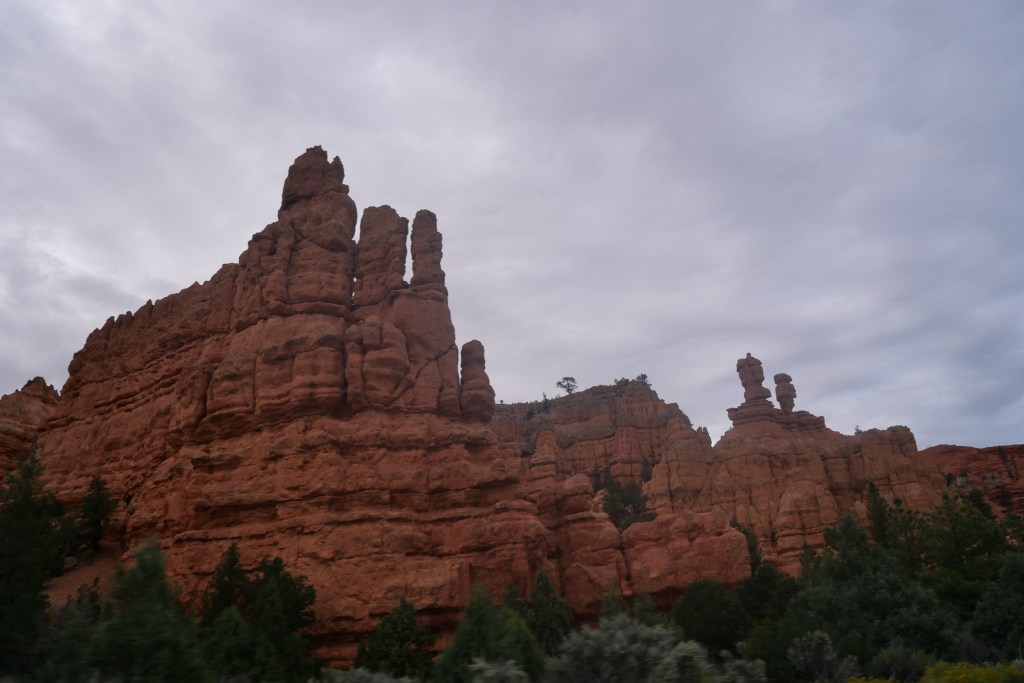
In fact, the forest surrounds Bryce Canyon, which makes it even more of a surprise to see it.
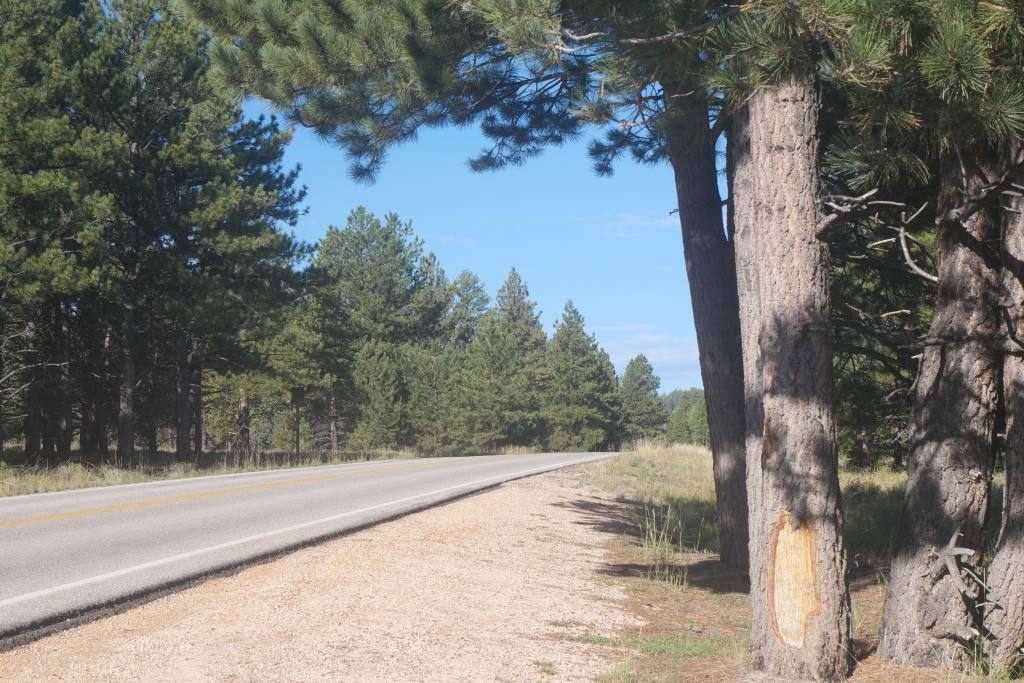
It was raining the morning we visited Bryce Canyon National Park. We decided to only visit the first four scenic overlooks. I was unprepared for the sight I saw at Bryce Point, even with heavy rain clouds. It made me feel dizzy to look at it.
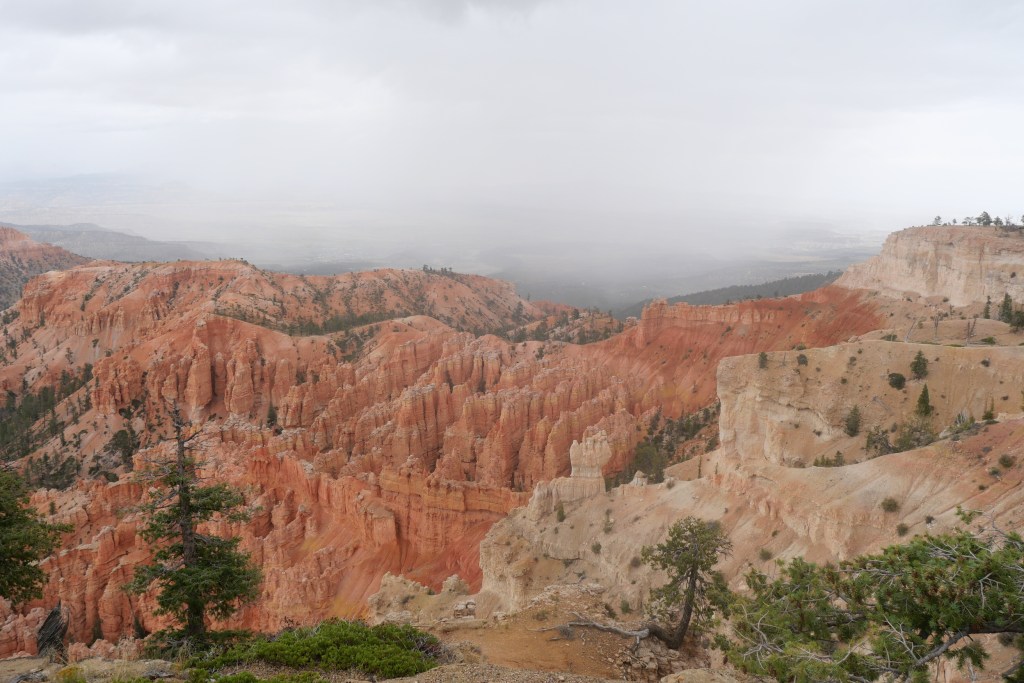
Here is a picture from the next day when it was sunny.

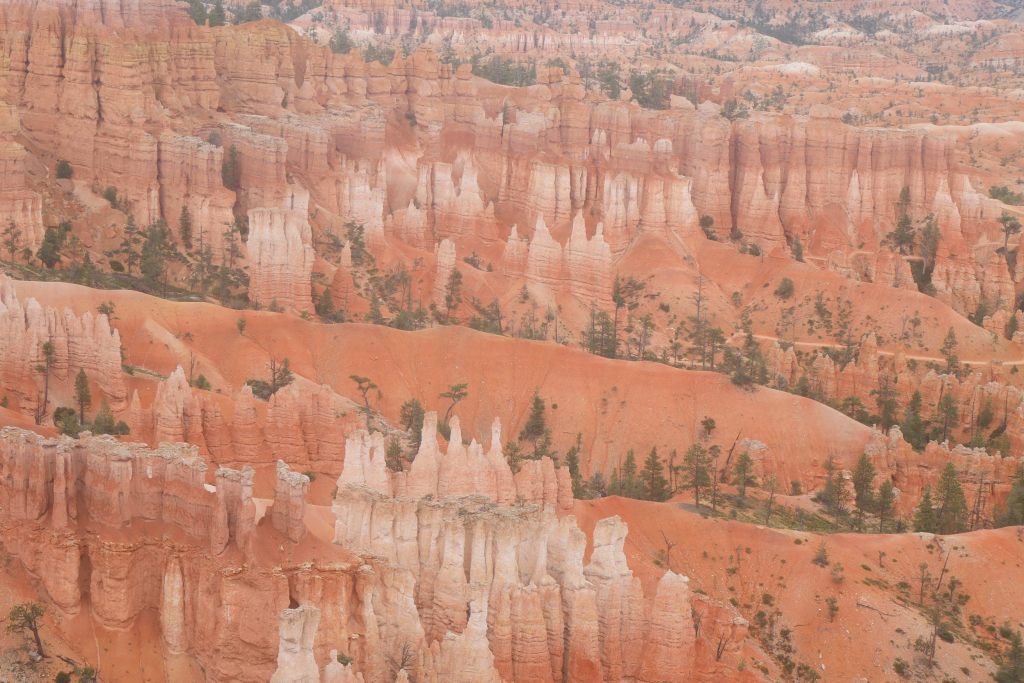
It turns out that Bryce Canyon is not a canyon because it was not cut out by a river. It is a series of amphitheaters. The rock is limestone, and limestone is white. The colors of the rock are caused by oxidized iron (red, yellow, orange, and brown) and manganese (blue and purple) deposits.
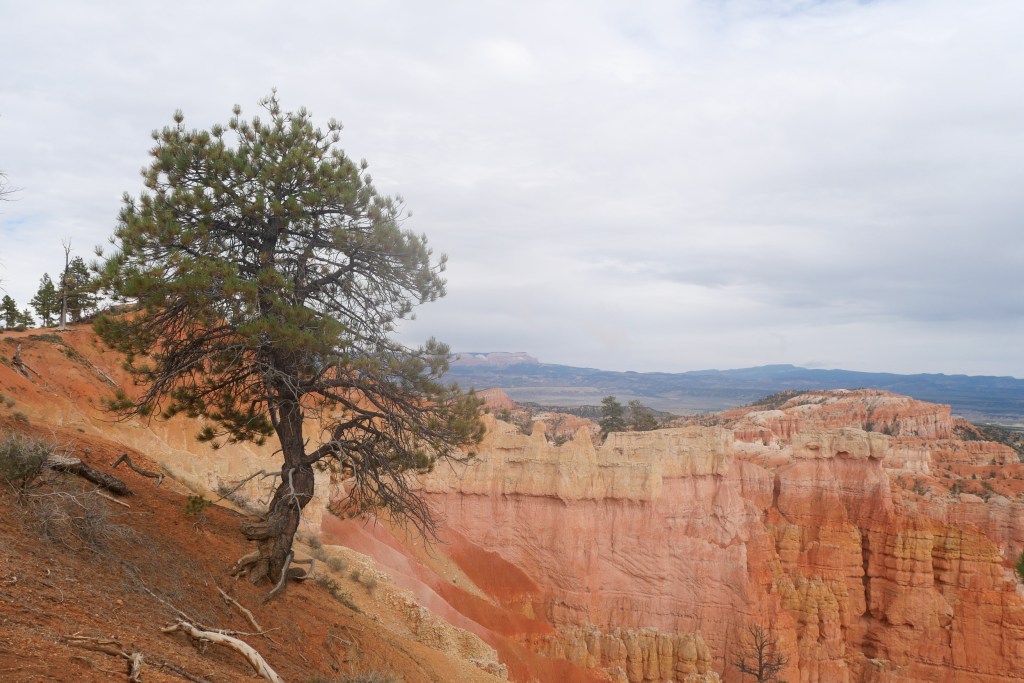
Despite the rain and clouds, we still enjoyed the views. I especially love how trees adapt to these environments.
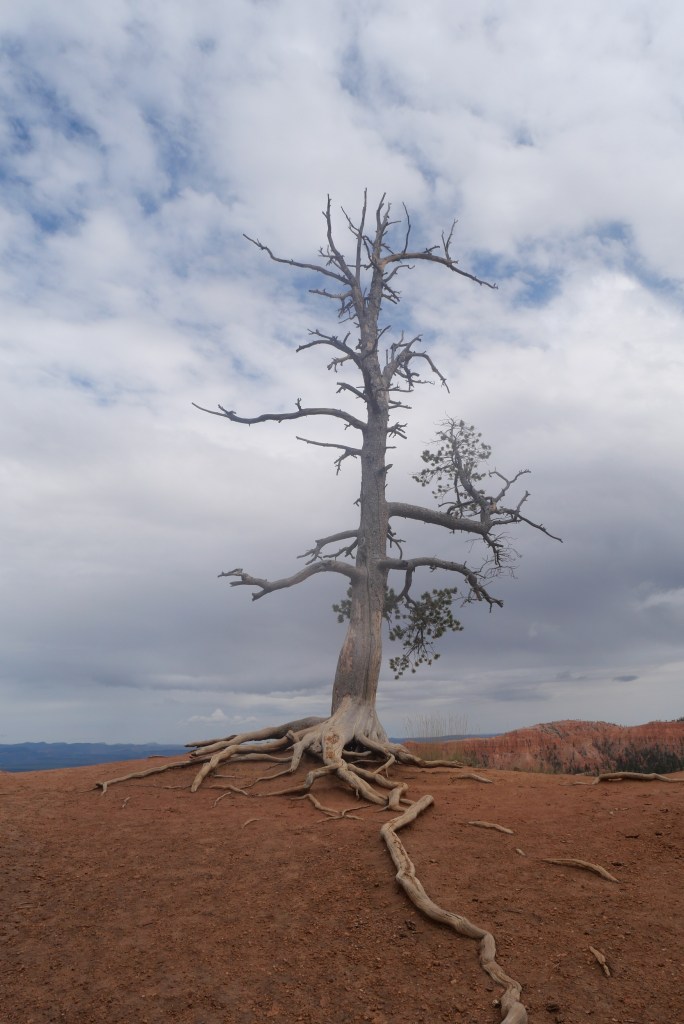
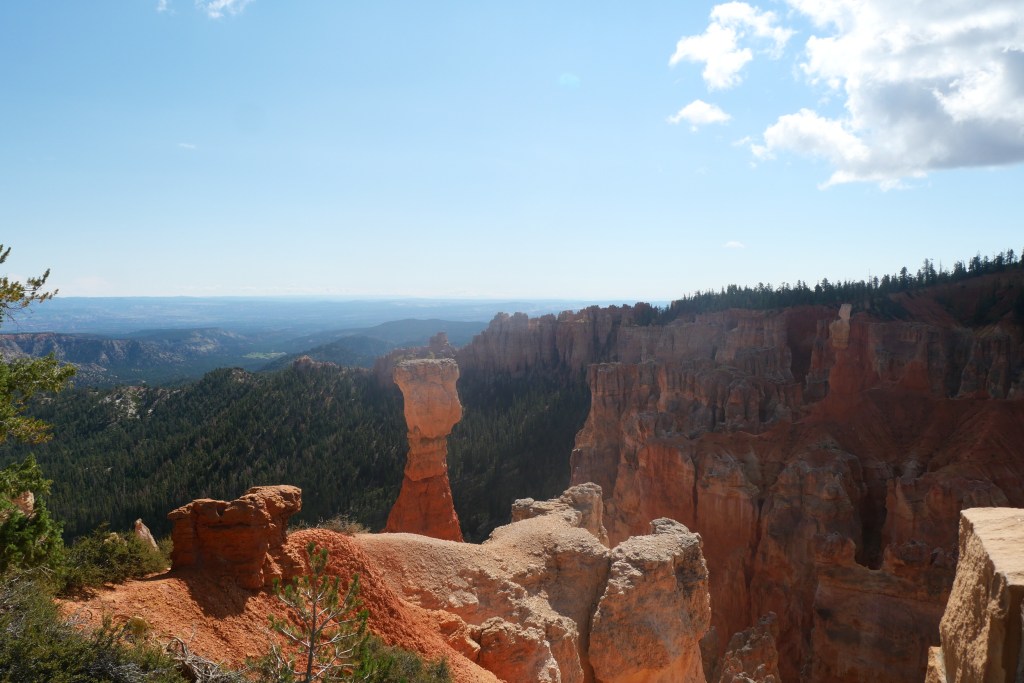
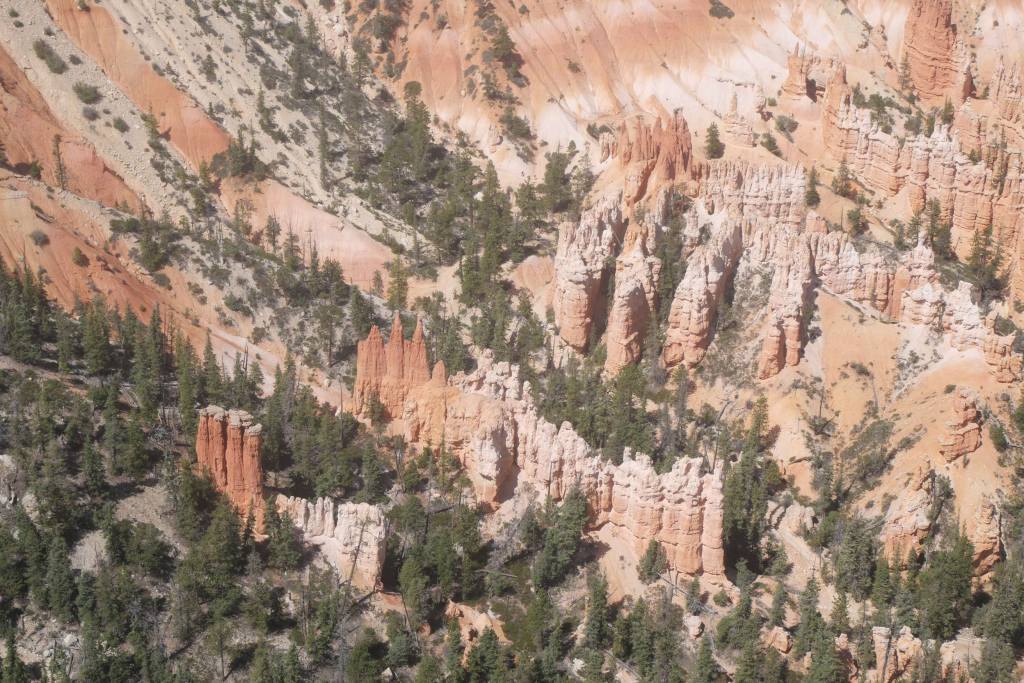
The following pictures are from our second visit when we drove the entire 18-mile scenic drive and visited all of the scenic overlooks.
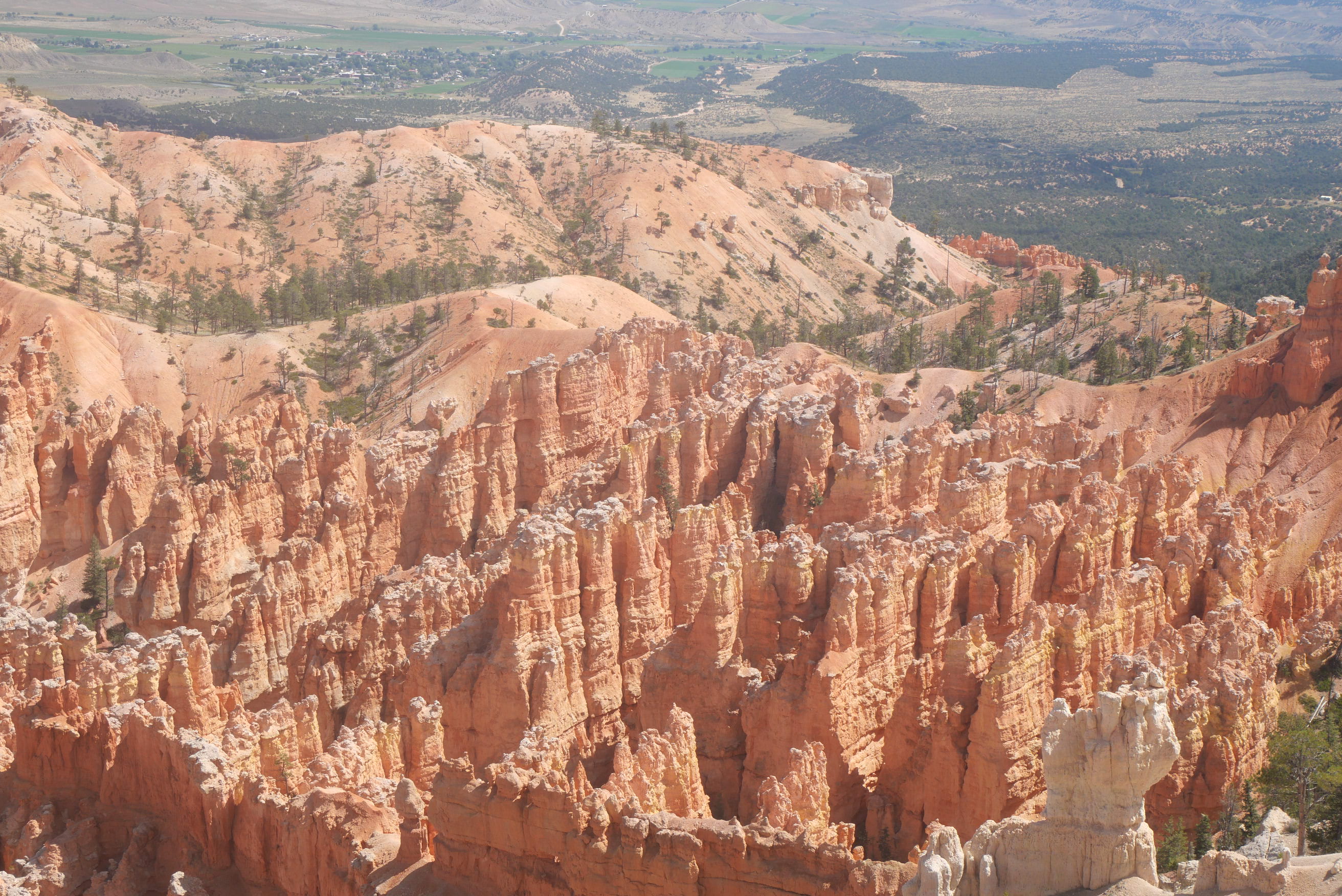
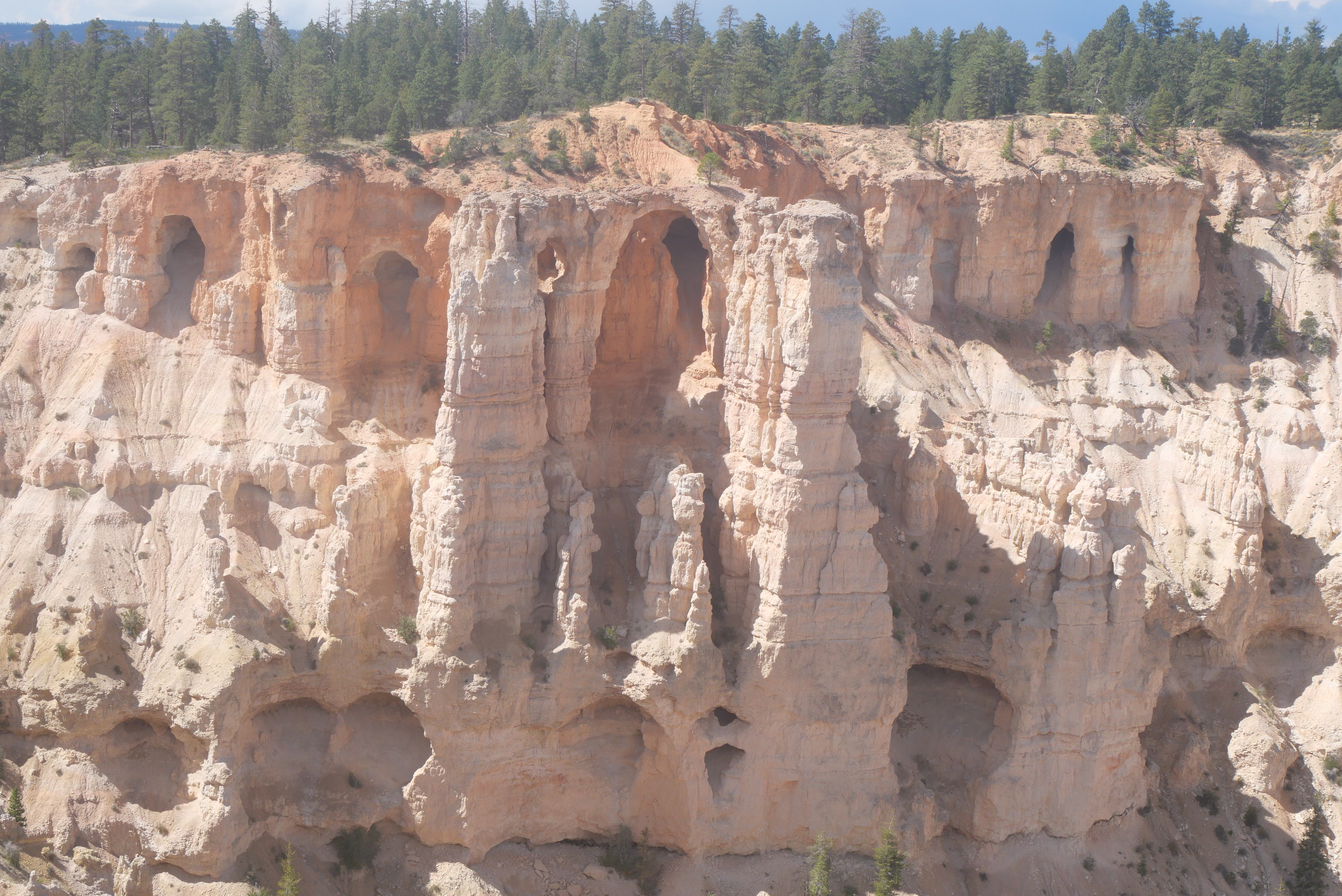
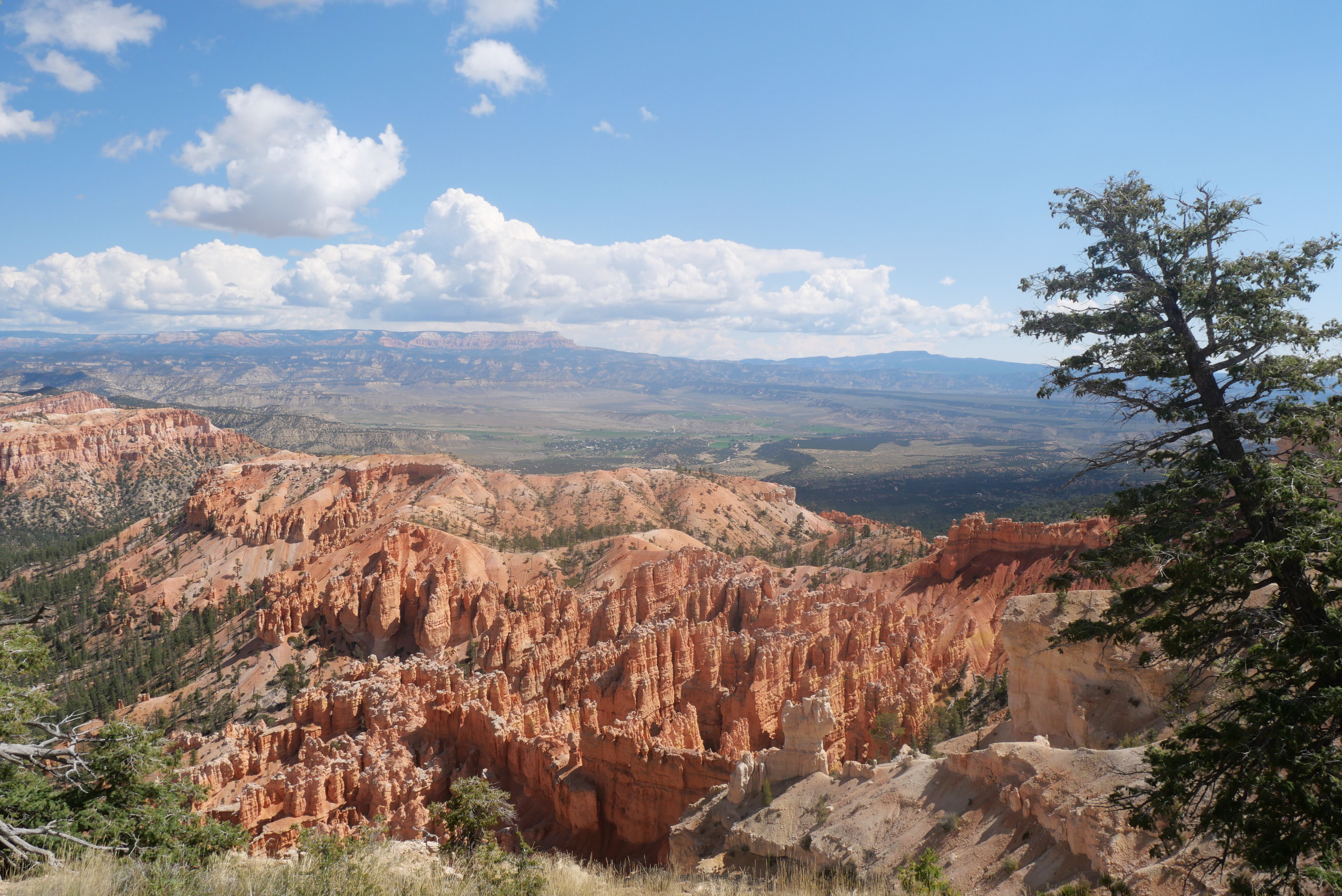
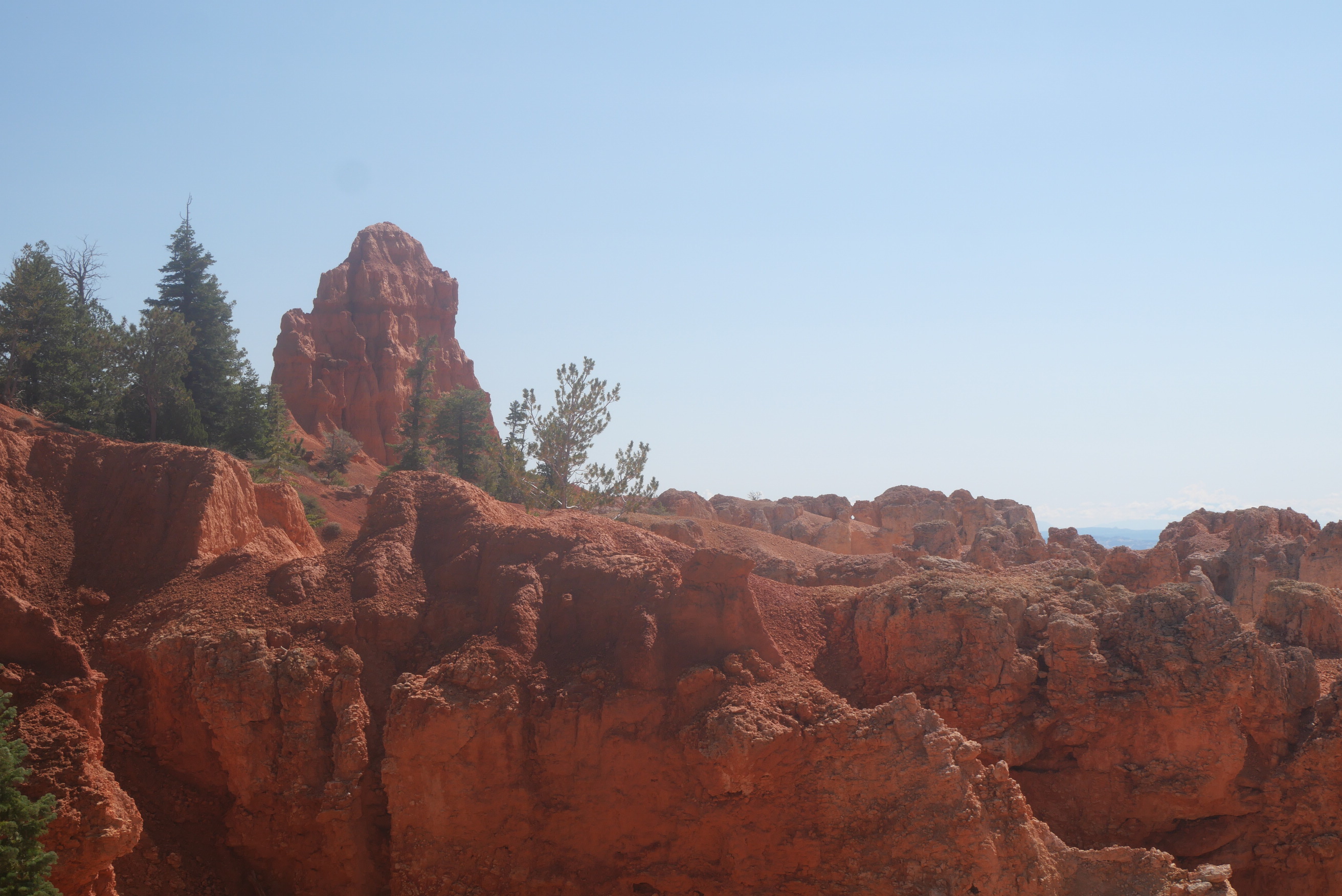
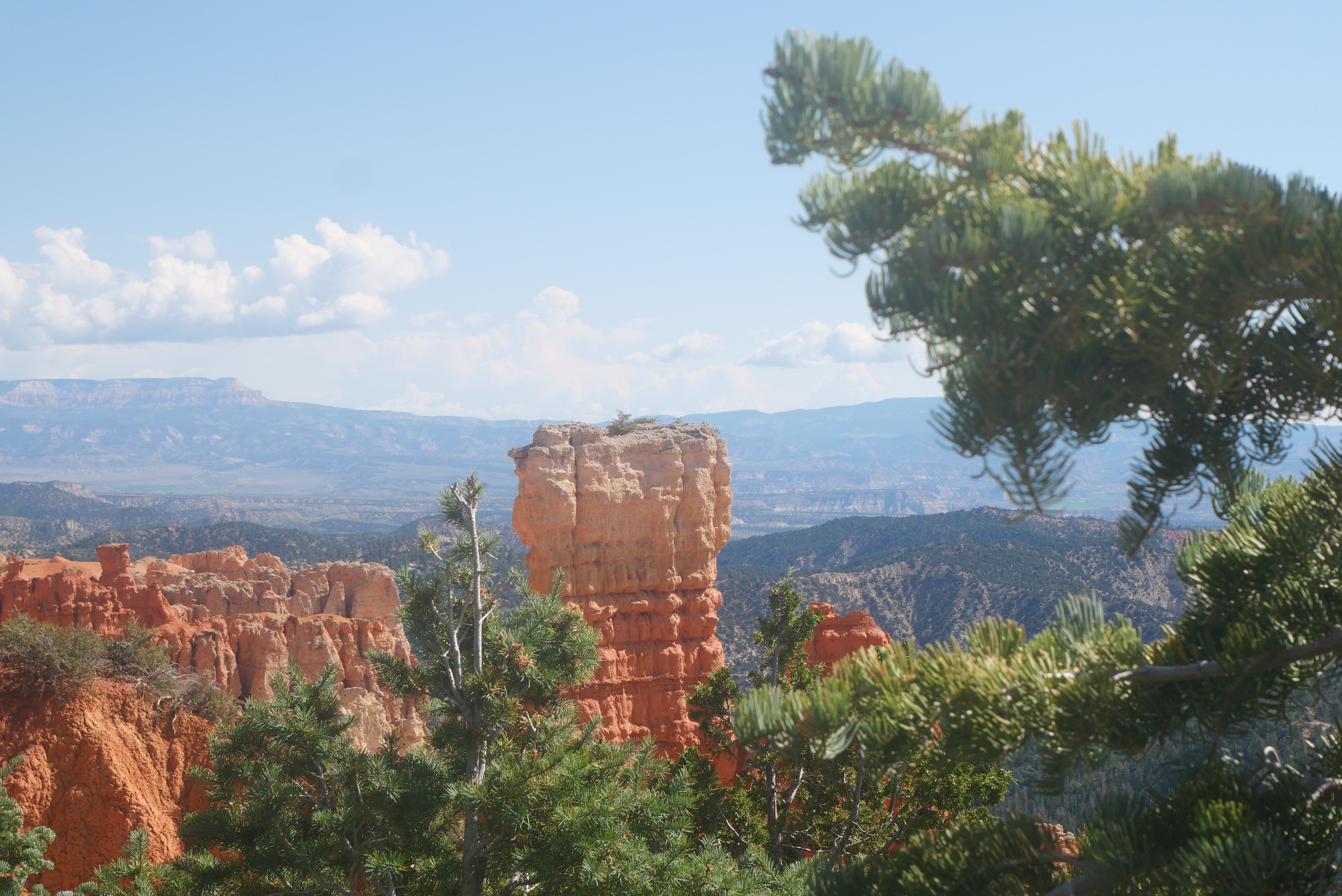
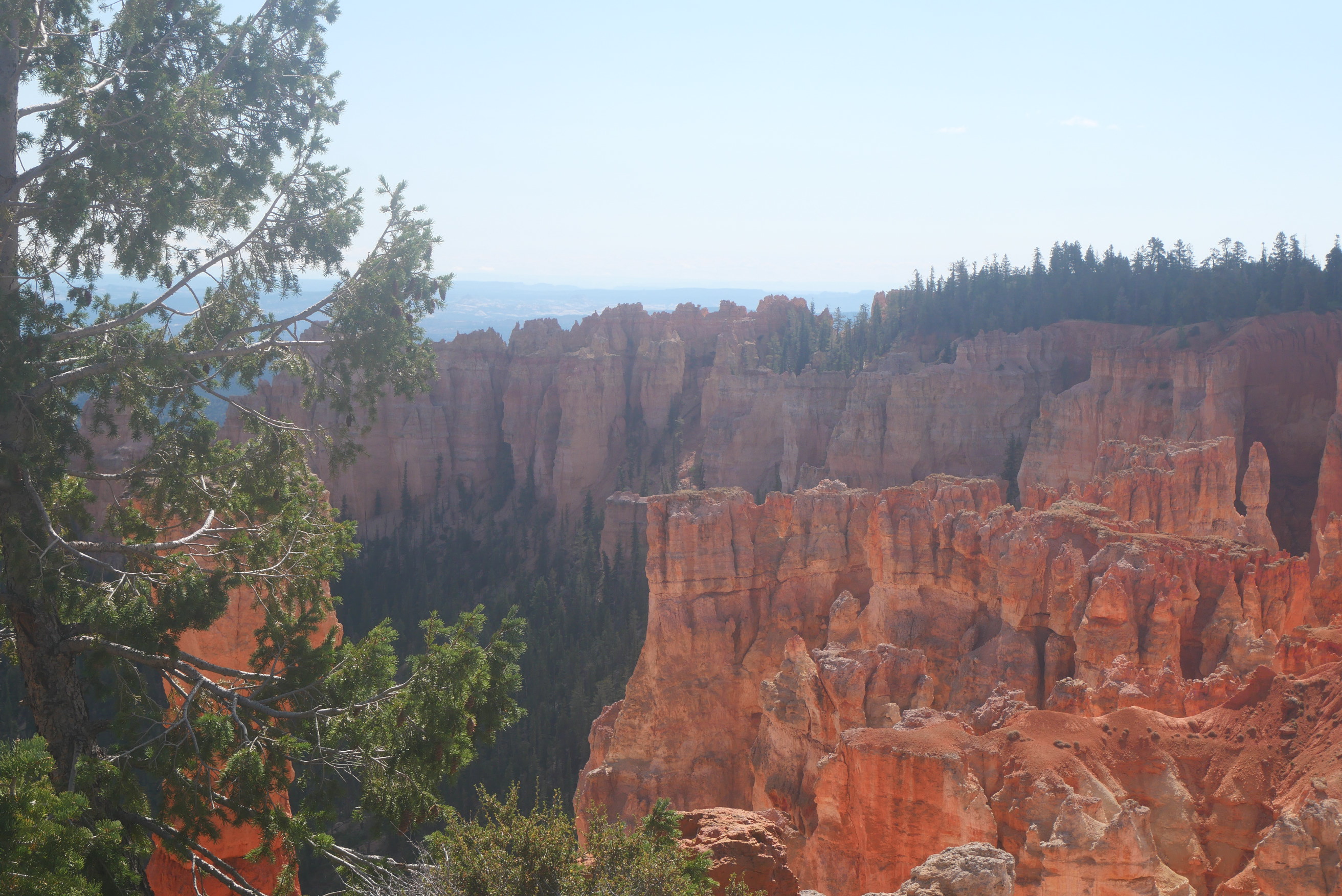
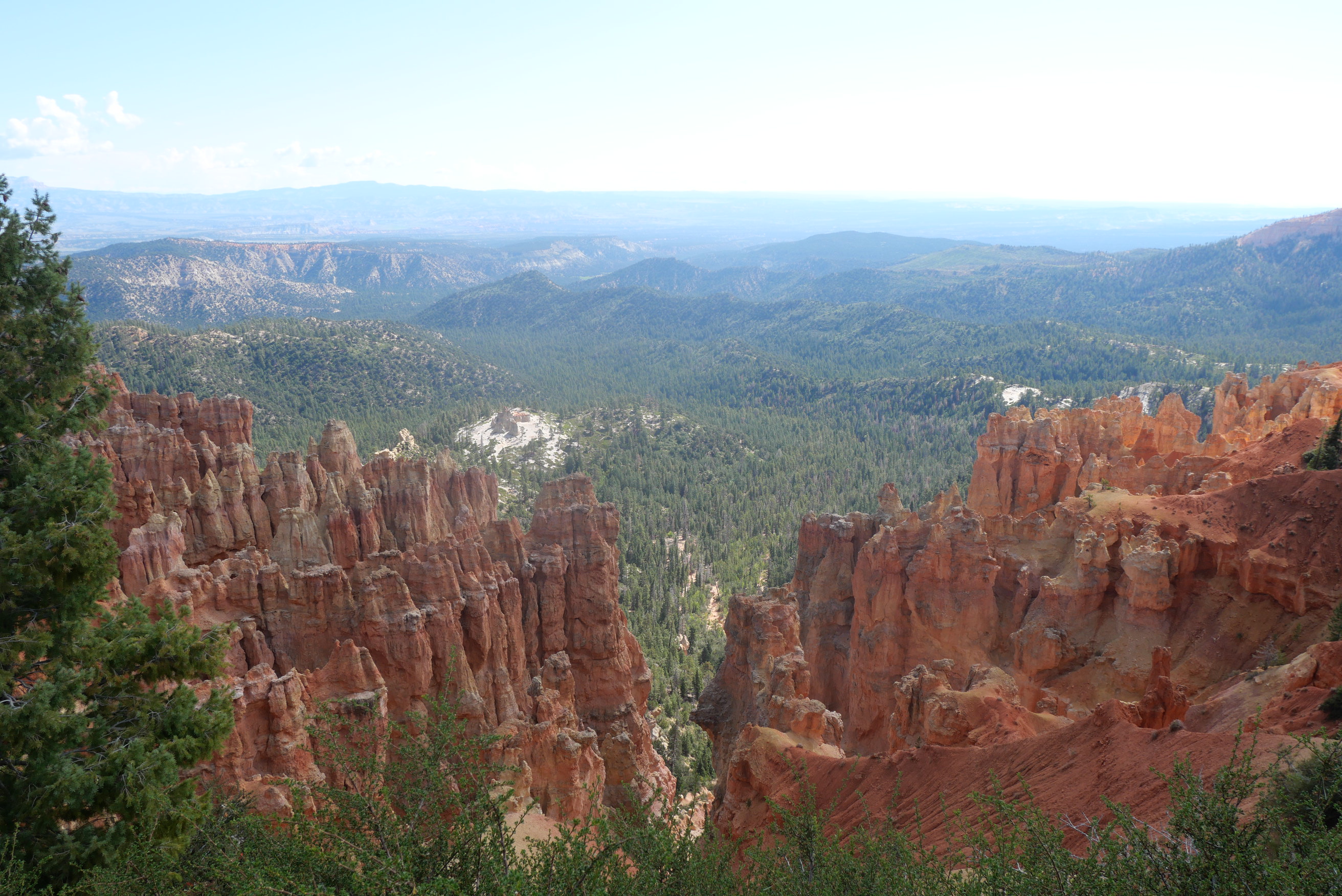
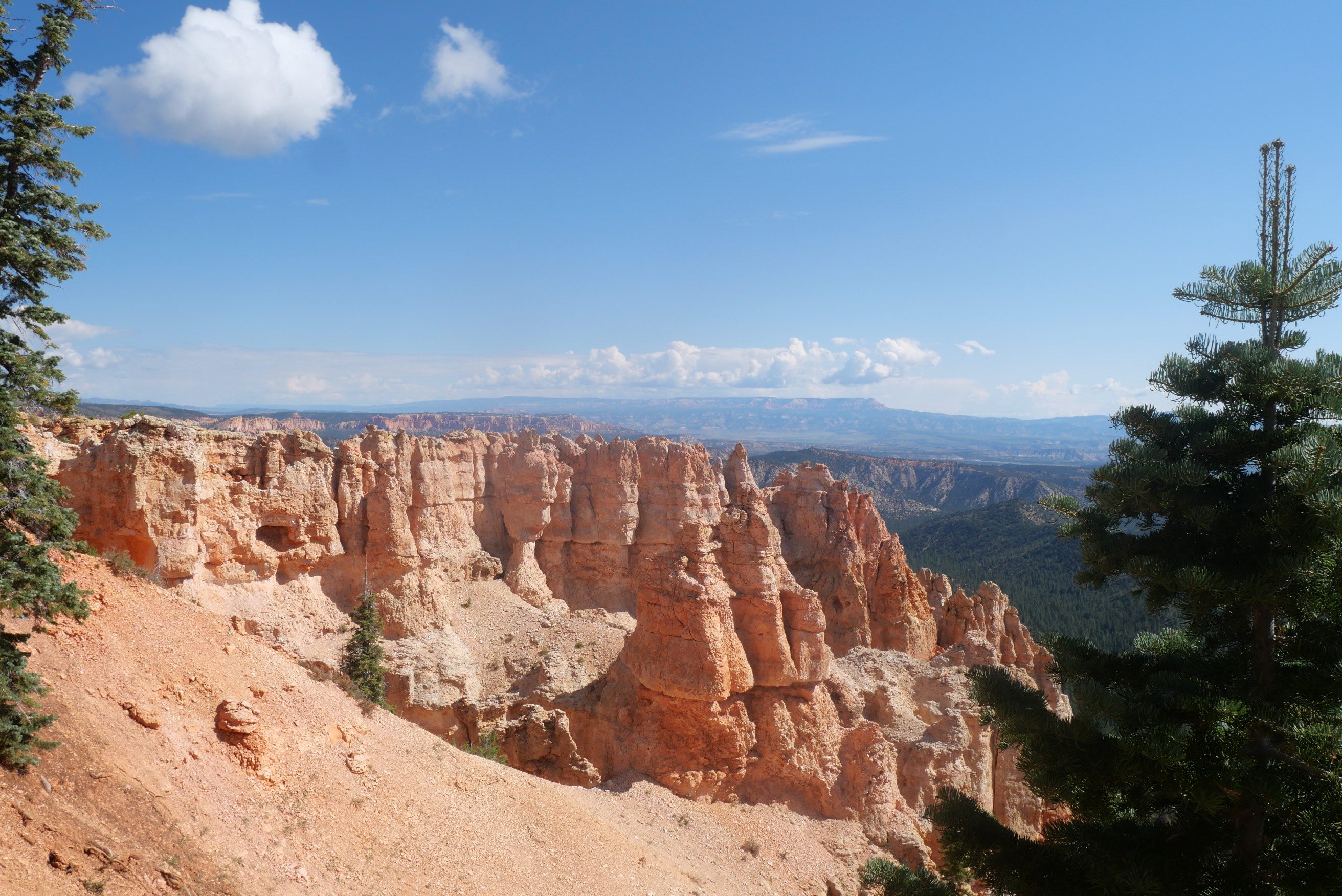
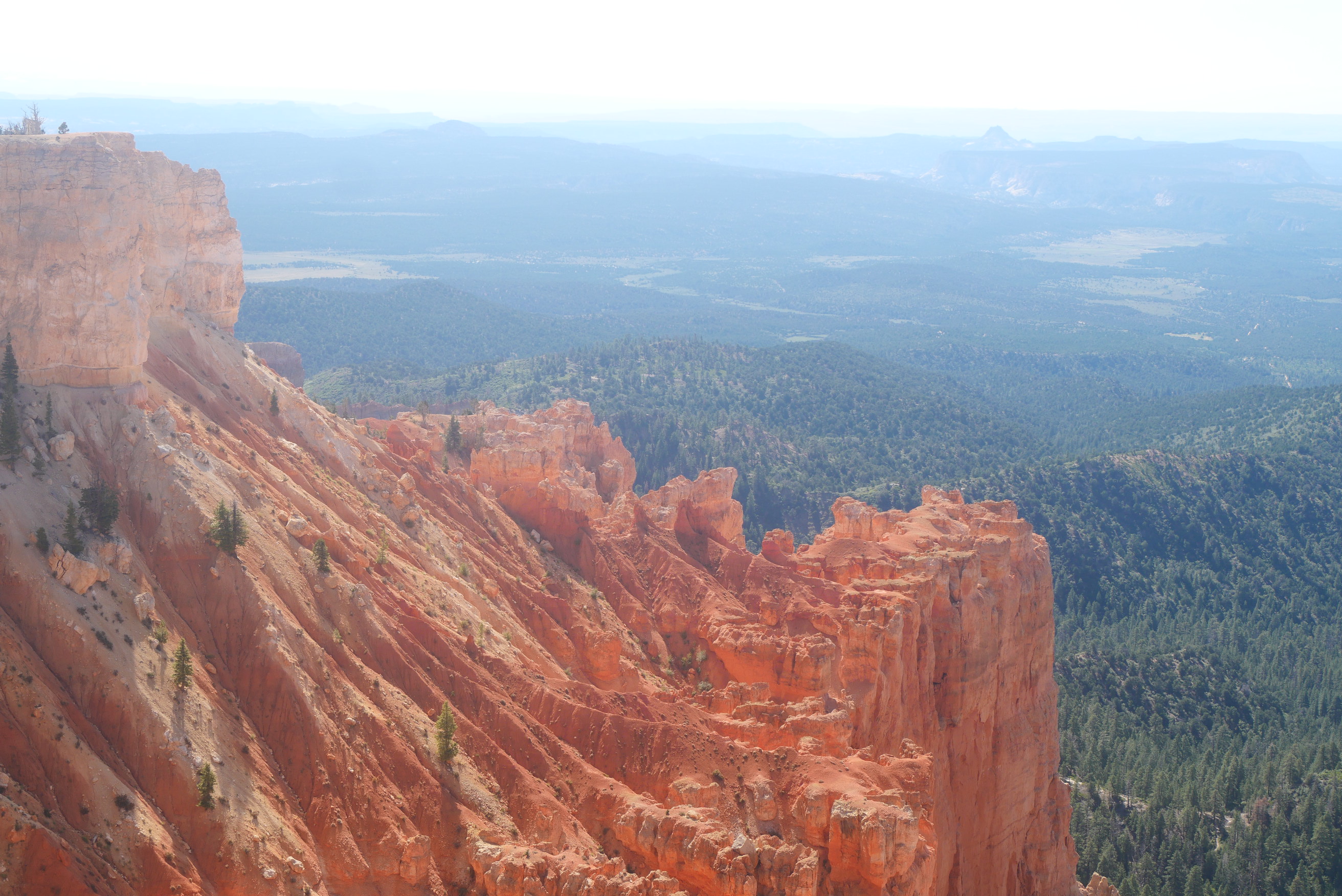

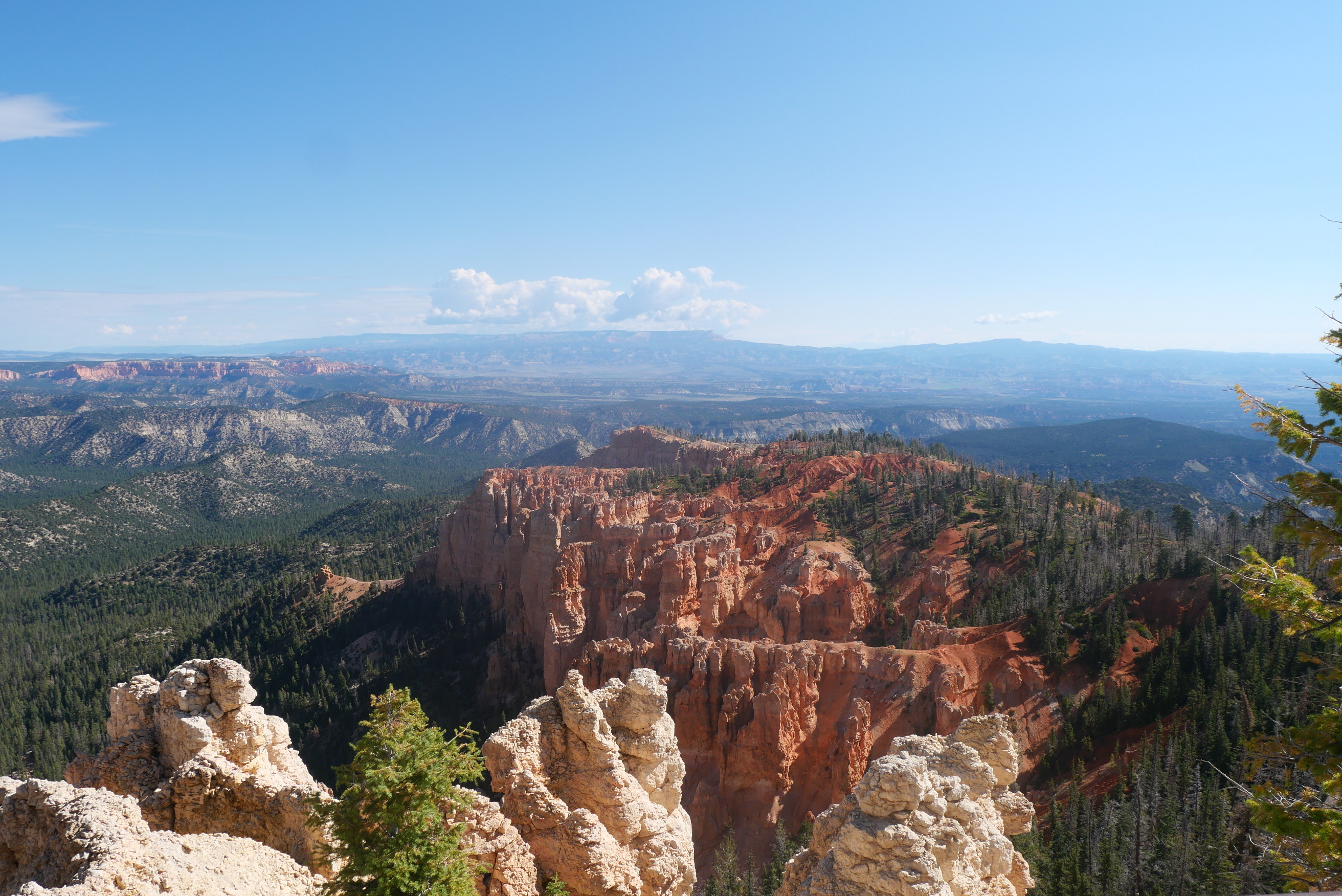
The erosion that occurs here results in windows, doors, natural bridges, and, of course, hoodoos. Bryce Canyon has the largest number of hoodoos in the world.
According to people of the Paiute Tribe, hoodoos are called the “Legend People” (To-when-an-ung-wa). They were people who took too many resources from the land (water, pine nuts, etc.), so Coyote, the trickster, invited them to a big feast. He turned the To-when-an-ung-wa into stone before their first bite.
Natural Bridge
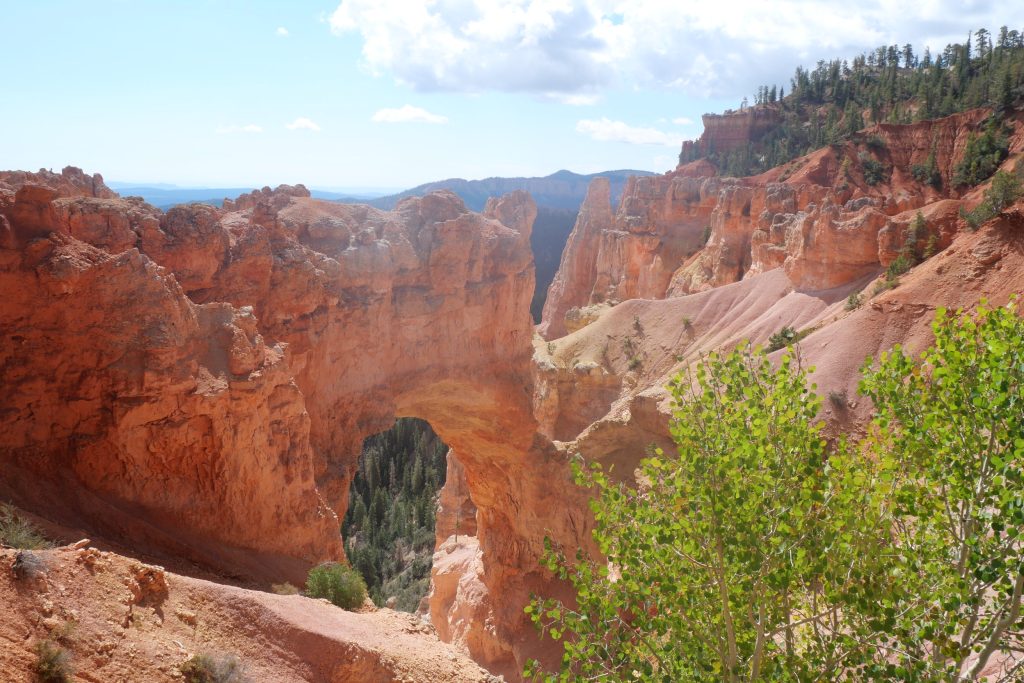
Bryce Canyon is more awe-inspiring and beautiful than I can capture in pictures. I hope you have a chance to visit one day.
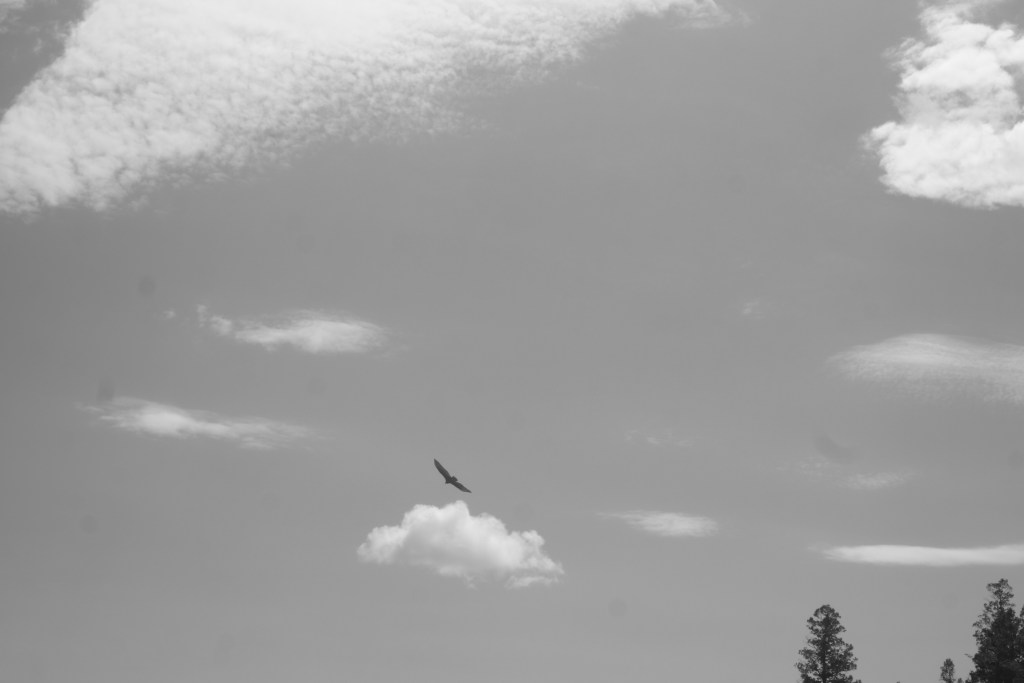
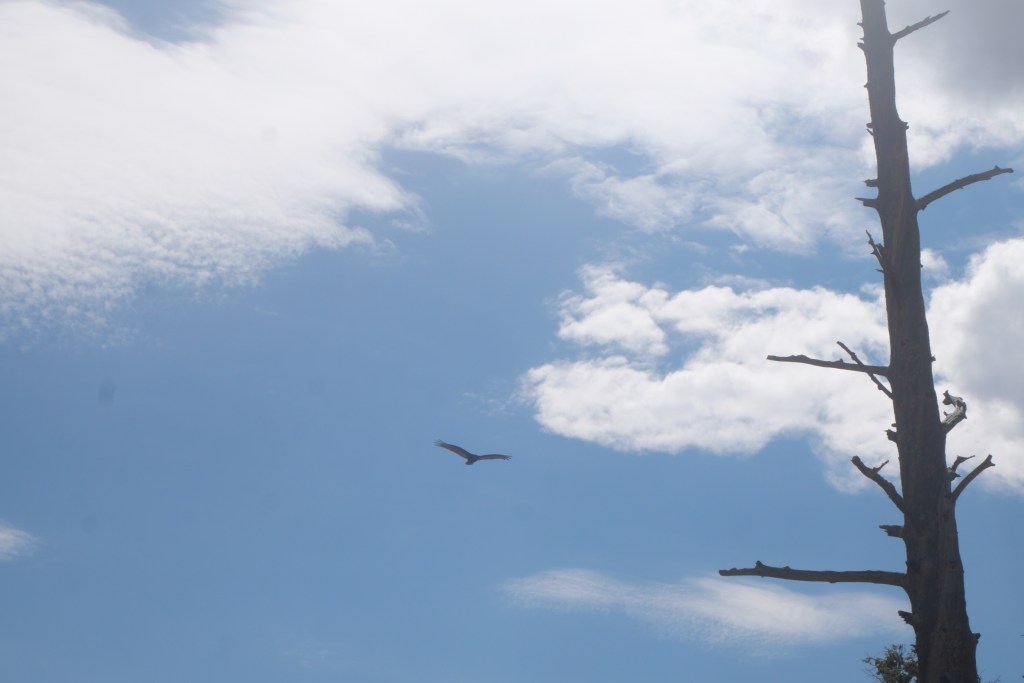
Here are your bonus pictures: birds flying over Bryce Canyon.
 WanderLyd